Fares & Ticketing
Fares and ticketing have a direct impact on passenger growth, customer experience and revenue.
The right approach needs to balance affordability and simplicity for passengers with the commercial and financial requirements of operators and transport authorities.
Museum House Consulting can support fares reviews, ticket product development and simplification, multi-operator and integrated ticketing, concessionary travel and the practical implications of changes to ticketing arrangements.
Our approach combines analysis of sales and passenger data with practical experience of how fares and products are communicated, sold and understood by customers and frontline staff.
Fares Review
Passenger behaviour, operating costs and the competitive environment all change over time, making regular review of fares important.
Using sales and passenger data, we can assess existing fare structures and help identify opportunities to grow revenue, simplify pricing or respond to changing market conditions.
This could include an annual fares review, changes in competitor pricing, consideration of flat or zonal fares, or assessing the potential passenger and revenue impact of a wider change in fares strategy.
Ticket Products & Simplification
More choice does not always mean a better proposition for passengers.
Large and complicated product ranges can make it difficult for customers to identify the best ticket and harder for frontline staff to explain or sell the options available.
We can review product sales and usage to identify opportunities to simplify the range while protecting revenue and ensuring that important customer needs continue to be met.
This can also include consideration of digital and onboard sales channels and how easily customers can understand and purchase the products available.
Multi-Operator & Integrated Ticketing
Multi-operator and multi-modal ticketing can make public transport significantly easier to use where passengers genuinely benefit from access to more than one operator or mode.
Museum House Consulting has experience of establishing multi-operator bus ticketing and of the governance of multi-modal ticketing arrangements.
We can support the development or review of schemes including operator agreements, product design, revenue allocation, administration, sales and marketing.
We can also provide an independent assessment of whether a proposed scheme is likely to generate sufficient passenger benefit and demand to justify the costs and complexity involved.
Concessionary Travel
Concessionary travel can represent a substantial proportion of passenger journeys and operator revenue.
We can review concessionary usage alongside commercial fare and passenger data, assess the potential impact of changes to schemes and help operators or authorities understand the wider implications for services and revenue.
Our experience includes the introduction of Scotland's national Under 22 concessionary travel scheme and the operational and commercial impacts of major changes in concessionary travel.
We can also support organisations considering how concessionary or discounted travel can form part of wider passenger growth and transport policy objectives.
Case Study
Fares Simplification
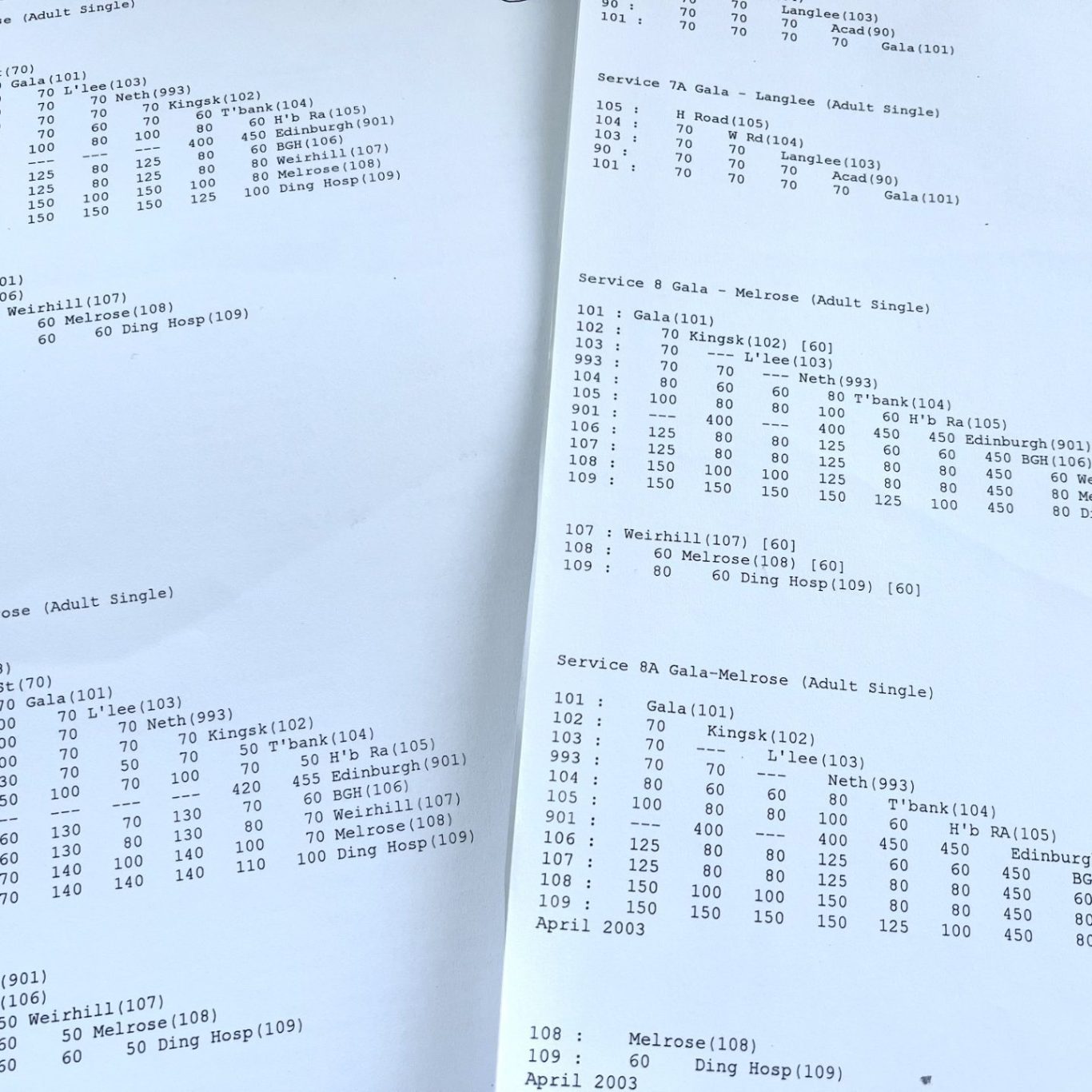
A comprehensive fares review identified that an increasingly complex product range had become difficult for both passengers and frontline staff to understand.
Using detailed sales data, the fares structure was significantly simplified — reducing 80 individual single fares to 17, 28 zones to 17 and 16 zonal price points to just three.
Frontline staff were involved throughout the process to ensure that the revised structure was practical to explain and sell onboard.
The objective was not simply to increase fares, but to create a clearer proposition that could be readily understood and promoted to passengers and stakeholders.
Following implementation, the simplified structure supported passenger growth, improved customer satisfaction, increased sales through digital channels and improved staff engagement.
Case Study
Multi-Operator Ticketing
Our experience includes involvement in establishing a smartcard-based multi-operator ticketing scheme in a Scottish city and its subsequent expansion into a neighbouring rural area.
The work involved large and small operators and included agreements, revenue allocation and the development and marketing of the ticketing proposition.
The experience also demonstrated that multi-operator ticketing does not automatically create additional passenger demand.
Where operators have limited network overlap, or services predominantly carry concessionary and contracted passengers, the administrative, back-office and marketing costs of a scheme can outweigh the additional revenue generated.
Successful integrated ticketing therefore requires both a sound technical and commercial structure and a clear passenger need for the product.